
How NiMet Is Segmenting Weather Action For Sustainable Climate Resilience

The Nigerian Meteorological Agency (NiMet) has highlighted major improvements in its engagements with the public and its existing clients, outlining key achievements recorded within the past year and commemorating two years under the new management.
The Directorate of Public Affairs and Consumer Protection playing a central role in coordinating NiMet’s public image, disseminating the weather information, and safeguarding consumer rights, has undergone notable upgrades that enhance national weather communication for early warning systems, the safety of lives and property and the protection of the means of livelihood.
“The notion to segmenting weather action is to tailor adaptation and risk management strategies to specific context hazards, industries, sectors, communities and their locations, rather than a one size fits all approach,” says the Director, Mrs. Funke Adebayo-Arowojobe.
“Weather Data and Weather Action for the Aviation sector is different from that
for the agricultural sector, state government, construction, humanitarian and healthcare sectors, etc. The target approach helps each group and the Federal Government as a whole to increase the effectiveness of resilience building efforts across the board.
The benefits of these include targeted Interventions like the coastal and flood prone areas/ communities that require different flood management strategies than do other heat/dry lands. There is also prioritization and effective allocation and utilization of scarce resources, increased sector/ solutions specific collaborations and synergies, better risk preparedness and time management through the use of adaptive pathways, especially for risks considered as a threat to national security and increased overall effectiveness.
To achieve this, the directorate embarked on a number of strategic initiatives during the year. One of them is Strategic Communication and Public Enlightenment.
In the year 2025, the directorate has deepened its mandate by improving the simplification of technical forecasts for dissemination. The Forecast Communication Team received continuous training, enabling them to translate complex meteorological data into clear public advisories. The Directorate also expanded its public outreach through exhibitions, agricultural shows, and community-based awareness drives to promote climate-smart agriculture and weather safety.
Another initiative is enhanced collaboration with NiMet’s Quality Management System.
This has ensured that all communication aligns with ISO-compliant processes. Additionally, a more robust media-monitoring system now allows the agency to counter misinformation swiftly, especially during extreme weather events.
There is also Improved Customer Engagement and Service Delivery. The Directorate strengthened internal coordination among the Public Relations, Commercial, and Consumer Protection units as well as with other units in other Directorates in the Agency as a whole. As a result, weather alerts and advisories are now closely aligned with customer-service responses, ensuring faster public feedback handling.
New customer-friendly systems were introduced, including a centralized Customer Engagement Desk with an interactive email addy and chat box for real-time feedback channels for aviation, agricultural, research, and health sectors, as well as improved social-media listening tools. These innovations have enabled NiMet to respond promptly to public concerns and deliver more impact-based weather advisories.
This creates a feeling or emotion that builds loyalty when products are created to suit clients’ needs.
The next is improved capacity building in media delivery and responsiveness. Over the past year, the agency has improved its capacity building through the training and retraining of a lot of its personnel, including some of the directorates staff, to enhance service delivery. This will aid information distribution both on life and social media coverages and improve integration with forecasting systems for real-time public updates and reduce the peddling of fake news through controlled weather information dissemination Staff across units received training in climate communication, crisis response, work ethics, and customer-relations management and stakeholder relations.
There has equally been enhanced stakeholder engagement nationwide. NiMet has broadened engagement with key sectors such as aviation, agriculture, disaster management, marine operations, academia, and the general public. In the past year, the agency conducted a stakeholder forum, targeted farmer education programs and stakeholder feedback sessions, and expanded its presence on digital platforms. These engagements helped the directorate better identify and prioritize the needs of high-impact groups such as farmers, aviators, and emergency responders.
The sixth initiative is higher service standards for consumers. To improve customer experience, the directorate set new service standards, including defined response-time benchmarks, clearer and more user-friendly weather updates, strengthened internal accuracy checks, and adherence to professional and empathetic customer-service practices.
A new service innovations unit was recently inaugurated to promote new innovative ideas and celebrate development. These improvements have resulted in better commitment
Several reform initiatives have already begun producing positive outcomes. These include the development of the National Weather Awareness Program (NWAP), simplified forecast formats, stronger complaints-escalation processes, and expanded rural outreach through community radio. These reforms have led to increased farmer engagement, reduced misinformation during weather crises, higher digital interaction, and quicker resolution of aviation and public complaints.
There is now stronger collaboration with government agencies. Within the period under review, NiMet strengthened partnerships with state governments through joint sensitization with SEMAs, agricultural collaborations, and support for state-led risk-communication programs. At the federal level, NiMet has maintained regular communication with the Ministry of Aviation and Aerospace Development, contributed to inter-agency risk-management efforts, and supported national climate-service policies.
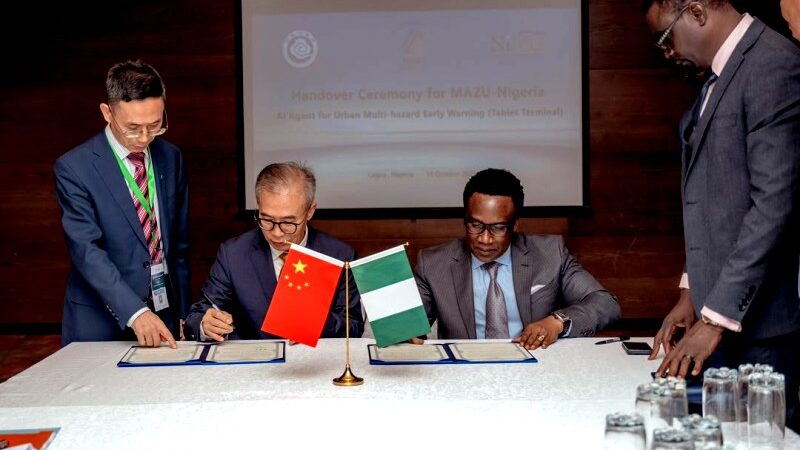
NiMET entered into MOUs with local and international organizations like the Agro- Industrial Processing Zones, African Agricultural Technology Foundation, Landmark University and Adamawa State University, to mention a few, thereby improving collaboration and building more partnerships for progress.
Based on the progress recorded in the first two years, NiMET says “Nigerians can expect more accessible and simplified weather information, improved early-warning systems, wider rural reach through road shows, town hall meetings, the delivery of a serviced charter for clarity and accountability, enhanced consumer-protection processes, and innovative digital engagement tools. NiMet remains committed to collaborating with critical sectors to safeguard lives, protect property, and strengthen national climate resilience.
Whilst appreciating the general public and our distinguished stakeholders, for their continued support, we wish them all compliments of the season and a happy and prosperous new year in advance.”